

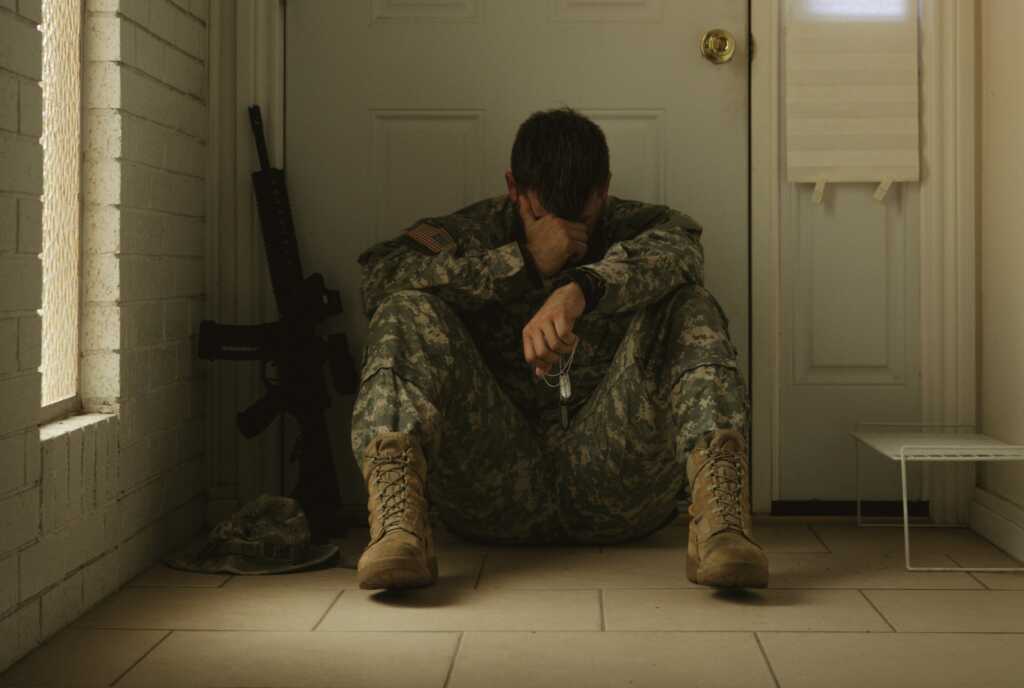
The war does not always end when the deployment does.
Many times, war follows veterans home. It lingers through sleepless nights, chronic pain, broken relationships, isolation, and the quiet belief that no one truly understands. Then one day, another veteran makes a catastrophic decision — and they are gone. They die not on a battlefield halfway around the world but here at home.
That should concern every American.
After serving in the military for more than 20 years, predominantly in special operations, I witnessed extraordinary courage under impossible conditions. I watched men and women willingly risk their lives for people they would never meet. I also witnessed another battle — one fought in silence after the uniform came off. It is a battle against trauma, loneliness, loss of purpose, and hopelessness. Tragically, too many warriors lose that fight.
According to the U.S. Department of Veterans Affairs, approximately 17.6 veterans die by suicide each day — more than 6,000 every year. Many within the veteran community believe the true number may be even higher because several states with large veteran populations have not consistently been included in national reporting. Whether the true number is 17 or 20 a day, one truth remains: Far too many of those who once defended our nation are losing the battle at home.
They are not merely statistics. They are fathers, mothers, husbands, wives, sons, daughters, friends, teammates, and neighbors.
The reality is simple. Veteran suicide is not simply a military problem. It is not solely a health-care problem. It is an American problem.
Why should someone who never served care?
Because every freedom we enjoy today has been defended by someone willing to sacrifice for it. Veterans do not stop being America’s responsibility the day they remove their uniforms. They become our neighbors, coworkers, teachers, coaches, business owners, and volunteers. When they struggle, communities struggle. When they thrive, communities thrive.
No government agency, hospital, or nonprofit can replace what community provides. Healing happens in workplaces, in churches, in classrooms, in neighborhoods, through friendships, and around dinner tables. It begins when people choose to notice someone instead of assuming someone else will.
One of the greatest misconceptions about suicide prevention is that only mental health professionals can make a difference. Their role is essential, but prevention begins long before someone reaches a crisis. It begins with connection — a relative who picks up the phone, a mentor who starts a conversation, an employer willing to hire a veteran, a neighbor who checks in, or a community that refuses to let someone suffer alone.
Purpose changes people. I know because it changed me.
Like many veterans, I carried invisible wounds home from war. There were seasons of exhaustion, chronic pain, and isolation, and I questioned my purpose. My healing did not happen overnight or because of one person. It came through a network of medical professionals, mentors, family, friends, and people of faith who refused to give up on me. They reminded me that my story was not over.
That experience reshaped my life’s mission.
Today, I lead SOF Missions, a nonprofit dedicated to helping veterans find purpose and build resilience through holistic care that addresses the psychological, physical, social, and spiritual dimensions of healing. Every day, I see lives transformed because someone cared enough to walk beside a veteran. The common denominator is rarely money. It is people.
Imagine the impact if every American went one step beyond thanking a veteran on Veterans Day and intentionally improved the life of a veteran in their own community. Imagine businesses hiring more veterans. Imagine civic groups partnering with local veteran organizations. Imagine communities recognizing that preventing suicide is not only the responsibility of professionals; it is the responsibility of citizens.
Awareness alone will not end the veteran suicide epidemic, but awareness is where responsibility begins. When people understand the crisis, they ask better questions. When they ask better questions, they become part of the solution. And when communities unite around a common purpose, lives are saved.
President John F. Kennedy challenged Americans to ask not what their country could do for them but what they could do for their country. Perhaps today we should ask a different question: What can I do for the veteran living in my community? You do not need to have worn the uniform to answer that call. You simply need to care.
I often ask how our nation will be judged. I believe it will be judged not only by how it sends its soldiers to war but by how faithfully it walks beside them when they return home.
As the number of voices facing big-tech censorship continues to grow, please sign up for Faithwire’s daily newsletter and download the CBN News app, developed by our parent establishment, to stay up-to-date with the latest news from a distinctly Christian perspective.